
Buying Guides
What EV Charging Cable Do You Need for a Wallbox Pulsar Plus?
On this page
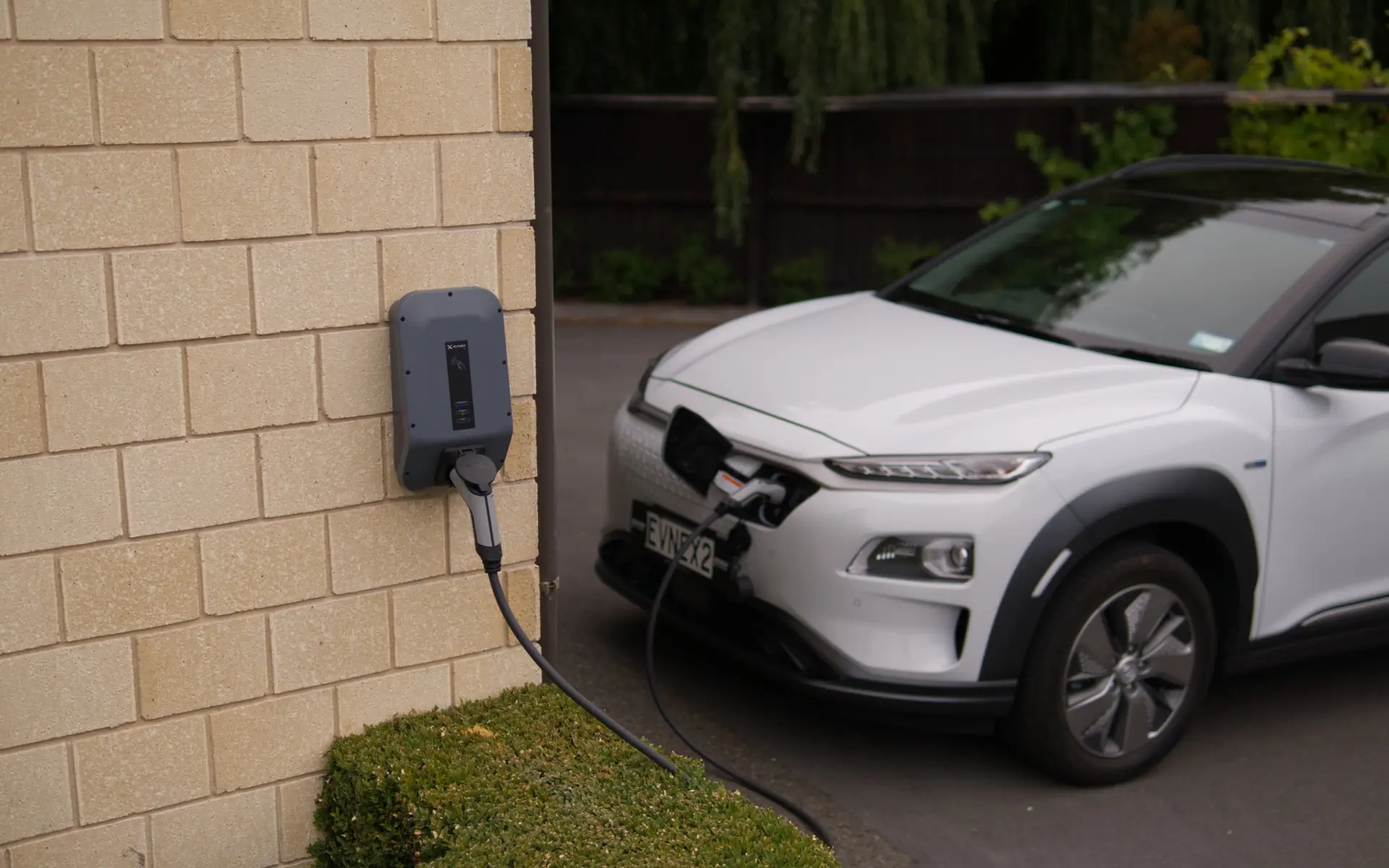
The Wallbox Pulsar Plus is an untethered (socketed) smart home charger. It has a standard Type 2 socket on the front, which means the cable is not built in. You plug your cable into the charger and into your car each time you charge. If you have one and need a cable, here is what to get.
The short answer
You need a Type 2 to Type 2 cable. One end plugs into the Pulsar Plus's Type 2 socket; the other plugs into your car's Type 2 inlet. For most UK homes the Pulsar Plus is installed as a 7.4kW (32A single-phase) unit, so a 7.4kW cable is what you need. If you have the 22kW three-phase version and a car that accepts 22kW AC, choose a 22kW cable.
About the Wallbox Pulsar Plus
The Pulsar Plus is a compact, smart OCPP-compatible home charger made by Wallbox, a Spanish manufacturer. In the UK it is sold in two power ratings:
- 7.4kW (single-phase, 32A) - the most common home installation. Works on a standard UK single-phase supply.
- 22kW (three-phase, 32A) - requires a three-phase supply, which most UK homes do not have. More common in commercial and new-build settings.
Both versions have the same Type 2 socket. The cable you need depends on the power rating of your installed unit and your car's onboard charger.
Which power rating should your cable be?
The cable's current rating must meet or exceed what the charger and car will draw. In practice:
- If your Pulsar Plus is the 7.4kW (32A single-phase) model, buy a 7.4kW cable. This is the case for the great majority of UK home installations.
- If your Pulsar Plus is the 22kW (three-phase) model and your car has a three-phase onboard charger, buy a 22kW cable. If your car is single-phase only, a 7.4kW cable still works fine - the charger and car negotiate the lower speed automatically.
If you are not sure which version you have, check the label on the unit itself or look in your installation paperwork.
What cable length do you need?
Measure the distance from where the Pulsar Plus is mounted to your car's charging port when parked in your usual position, then add a metre for slack. Standard lengths are 5m, 7.5m, and 10m; 5m works for most driveways where the charger is close to the car.
If the charger is at the top of the drive and the car parks at the far end, measure first - 5m may be short. A 7.5m or 10m cable handles longer runs without issue.
Coiled or straight?
Both work with the Pulsar Plus. A coiled cable hangs neatly from a bracket near the charger and springs back into a compact loop after each use. A straight cable is lighter and cheaper but needs to be coiled by hand and stored. For a fixed home installation with the charger close to your parking spot, a coiled cable is tidy and convenient. If you sometimes use the cable elsewhere or prefer lower cost, a straight cable is a sensible choice.
What type of cable does my car need?
The Pulsar Plus socket is always Type 2. The connector that fits your car depends on your car's inlet:
- Type 2 inlet (most cars registered from 2014 onward): Type 2 to Type 2 cable.
- Type 1 inlet (older Nissan Leaf, Mitsubishi Outlander PHEV, early Kia Soul EV): Type 1 to Type 2 cable.
If you are unsure which inlet your car has, use the vehicle finder on our site or check the shape of the socket on your car - Type 1 is a round five-pin connector; Type 2 is a larger seven-pin D-shape.
Does the Wallbox app affect which cable I buy?
No. The Wallbox app controls scheduling, smart charging integration (Octopus Intelligent, solar surplus, etc.) and monitoring. The cable carries the power; the app does not change the cable specification you need.
Frequently asked questions
Does the Wallbox Pulsar Plus come with a cable?
No. It is sold and installed as a socketed charger only. The cable is purchased separately. Some installers or retailers bundle a cable with the unit; if yours did not, you need to buy one.
Can I use any Type 2 cable with the Pulsar Plus?
Yes, as long as the cable's current rating matches or exceeds the charger's output. For the 7.4kW (32A) version, any 32A Type 2 cable is suitable. For the 22kW version, a 32A three-phase cable is required when charging at full power.
What happens if I use a 7.4kW cable on the 22kW Pulsar Plus?
The charger, the cable, and the car all negotiate the charge session. Using a 7.4kW (32A single-phase) cable on a 22kW three-phase charger means you charge at single-phase speed only, up to 7.4kW. The cable is not damaged; you simply do not use the charger's full capacity. If your car is single-phase anyway, this is exactly the right setup.
How long does it take to charge with the Pulsar Plus?
Charge time depends on your battery size and car's onboard charger. At 7.4kW, a typical 60kWh battery (around 200 miles of range) takes roughly 8 hours from empty to full. At 22kW (if both the charger and car support it), the same battery would charge in around 3 hours. Most owners charge overnight at 7.4kW and wake to a full battery.

Written by
Niko MoustoukasFounder · drives a Volkswagen ID.4 & ID.5
Niko founded EV Charge Cables after going through the same faff most new EV owners hit: working out which cable actually fits which car, at what speed, and in what length, without being upsold a heavier lead than the car can ever use.
More from NikoKeep reading
More
charging guides.
Straight answers on connectors, charging speeds and what actually fits your car.
View all guides
Compatibility
How to Charge a Plug-in Hybrid (PHEV)
Charge a PHEV like any EV: use a Type 2 or Type 1 cable, and because the battery is small, a slow charger is often enough overnight. Most PHEVs use a Type 2 inlet; some older cars need Type 1 A 3-pin granny charger usually refills a small battery overnight Most PHEVs cannot rapid charge and rely on home AC charging

Compatibility
Can Two EVs Share One Charger?
Yes, two EVs can share one charger by charging in turn, splitting power, or using a dual-outlet unit. Sequential overnight charging suits most two-car homes Some smart chargers split power between two cars at once, more slowly A spare cable removes the hassle of swapping the lead between cars

How-to
How to Look After Your EV Battery
Keep the charge between 20 and 80% daily, moderate rapid charging, avoid temperature extremes and precondition in the cold. A middle charge band is gentlest for everyday driving Use rapid DC occasionally and home AC for regular top-ups Precondition the battery in winter and store at around 50 to 80%

How-to
Should You Charge Your EV to 100%?
For most EVs, cap daily charging around 80% and only fill to 100% before longer trips. Nickel based batteries prefer a daily limit near 80% to reduce wear Charge to 100% before long journeys when you need full range LFP batteries are usually fine charged to 100% regularly: check your handbook