
LEVC charging cables.
Get the exact charging cable for your LEVC, matched to your model and ready to charge from day one. Free UK delivery, up to a 3-year warranty and 30-day returns. Pick your model below to see its recommended cable and real charge times.
The full range
All LEVC models.
Pick your model for its recommended cable, charge times and the right length.
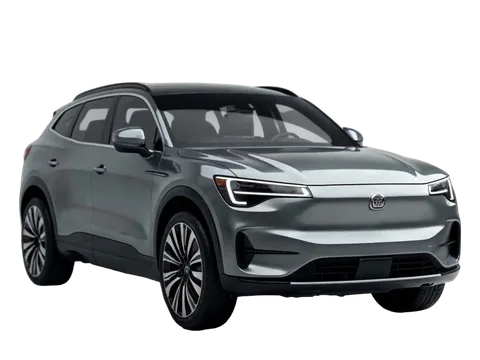
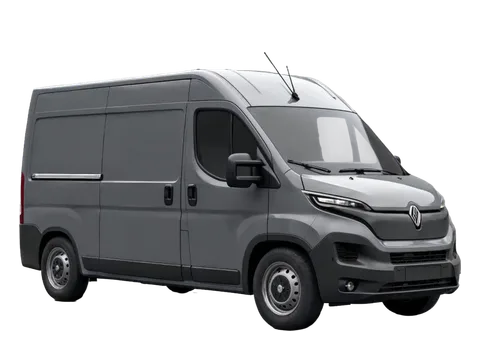
Charge speeds
Across the LEVC range.
Every LEVC here uses a Type 2 inlet, so one Type 2 to Type 2 cable fits the range. On-board AC charging ranges from about 7.4kW to 11kW depending on the model. A cable never charges faster than your car's on-board charger or your home supply allows, so on a standard single-phase UK home a 7.4 kW cable gives the full speed available.
Speeds are on-board AC limits. Rapid DC uses the station's own cable.
Charging guide
Charging
your LEVC.
LEVC builds the TX electric taxi and the VN5 commercial van, both of which use a range-extender plug-in hybrid drivetrain. Both vehicles use a Type 2 inlet for AC charging. The TX has an 11kW three-phase onboard charger, while the VN5 charges at 7.4kW on a single phase. Both also support DC charging at up to 50kW via CCS.
Despite different onboard charger ratings, the cable type is the same for both: a Type 2 to Type 2. The TX's 11kW capability is mainly relevant for depot charging or sites with a three-phase supply, which is common in commercial and fleet environments. Pick your model below for exact charge times, or read the brand-wide guidance underneath.
What charging cable does a LEVC need?
Both the TX and VN5 use a Type 2 inlet, so the cable you need is a Type 2 to Type 2. A 5m length suits most wallboxes and charge points. For depot or commercial use where the charger may be further away, 7m or 10m gives more flexibility. No LEVC vehicle needs a Type 1 cable.
The TX has an 11kW three-phase onboard charger. On a standard single-phase supply it charges at up to 7.4kW, so a 7.4kW cable gives the full speed available on a typical home or small-business connection. A 22kW rated cable only earns its cost if you have a three-phase supply, which is more common in commercial premises and taxi depots than in domestic settings. On a three-phase supply the TX will pull its full 11kW.
The VN5 has a 7.4kW single-phase onboard charger, so a 7.4kW cable is already more than enough for its full AC speed. Both vehicles have a 31kWh battery in PHEV configuration, which provides enough electric-only range for urban work before the range extender takes over. A single 7.4kW Type 2 cable suits both LEVC models for most charging scenarios.
LEVC FAQs
Good
questions.
Still not sure? Our team will confirm the right cable for your LEVC.
Contact usDo all LEVC vehicles use a Type 2 charging cable?+−
Yes. Both the TX taxi and the VN5 van use a Type 2 inlet and take a Type 2 to Type 2 cable for AC charging. No LEVC needs a Type 1 cable. Both also have a CCS port for DC fast charging.
What charging cable does an LEVC TX need?+−
A Type 2 to Type 2 cable. The TX has an 11kW three-phase onboard charger. On a single-phase supply it charges at up to 7.4kW, so a 7.4kW cable covers most home and depot scenarios. A 22kW cable only helps if you have a three-phase supply, where the TX will pull its full 11kW.
What charging cable does an LEVC VN5 need?+−
A Type 2 to Type 2 cable. The VN5 has a 7.4kW single-phase onboard charger, so a 7.4kW cable is the right choice and already gives its maximum AC speed. There is no benefit in choosing a larger cable for the VN5.
Can an LEVC TX charge at 22kW on AC?+−
No. The TX tops out at 11kW on a three-phase supply. On a single-phase supply it charges at up to 7.4kW. A 22kW cable would never deliver more than 11kW on a TX, and only that on a three-phase supply. For most taxi and fleet operators a 7.4kW cable is sufficient for overnight or between-shift charging.
What length cable do I need for an LEVC taxi or van?+−
5m suits most charge points, but for depot or commercial use where the charger may be positioned away from the vehicle bay, 7m or 10m is often more practical. Longer cables are heavier and cost more, so choose the shortest length that reaches your charge point comfortably.