

How-to
How to Stop EV Charging Cable Theft: Fixes That Actually Work (2026)
On this page

Cable theft rose with copper prices, but it is nearly always opportunistic, so the job is to make your cable a slower, riskier target than the next one. The single most effective fix is a connector lock that stops the plug being unclipped mid-charge, like the EVify Type 2 connector lock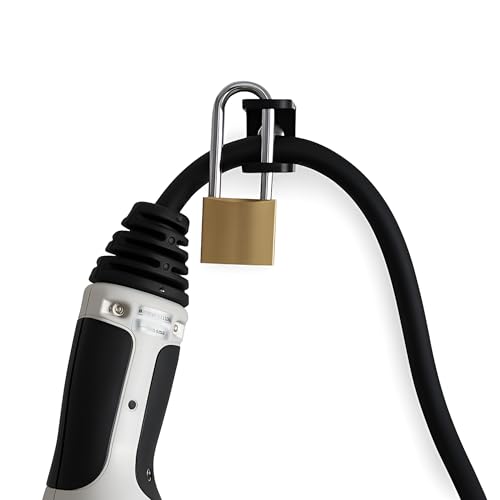 EVify Type 2 connector lock£19.33Buy on Amazon. On a driveway, add a lockable holster, and whenever you can, take the cable indoors when charging has finished.
At a glance: deterrents that work
| Deterrent | Cost | Effectiveness |
|---|---|---|
| Take the cable with you | Free | Highest, nothing to steal |
| Connector lock | £19.33 | High, stops quick unclipping |
| Lockable holster | £23.99 | High on a home charger |
| Anti-theft protector | £33.82 | Highest for a permanent setup |
Lock the connector first
A connector lock clips over the plug and stops it being released without a key or code, at both the car and the charger end. It is the cheapest high-impact fix, because most opportunist thefts rely on simply pulling the cable free in seconds. Locking the plug turns that into a slow, obvious job that is rarely worth it.
EVify Type 2 Connector Lock
- Locks the plug against quick removal
- Fits standard Type 2 connectors
- Cheap, effective deterrent
Price on Amazon
£19.33
Add a lockable holster on a driveway
If your cable lives on a home wallbox, a lockable holster secures the connector when the car is away and keeps the lead tidy off the ground. It padlocks the plug in place so it cannot be lifted and walked off, which closes the easy gap at the wall that a car-side lock alone leaves open.

EGNIO Lockable Charger Holster
- Padlock-lockable wall holder
- Keeps the connector secure and tidy
- Suits home wallbox setups
Price on Amazon
£23.99
For a permanent setup, a full protector
Where a cable stays plugged in for long periods, a wraparound anti-theft protector guards the whole connection rather than just the plug. It is more than most drivers need, but for a high-value cable left out regularly it is the strongest physical deterrent short of taking the lead away entirely.

SOMA Anti-Theft Cable Protector
- Guards the full connection
- Strong deterrent for permanent setups
- Tough weather-resistant build
Price on Amazon
£33.82
The free habit that beats any lock
No lock beats simply not leaving the cable out. When charging has finished, unplug the lead and store it in the boot or garage. Only leave it in place while the car is actively charging, and where possible charge while you are at home rather than overnight on the street. It costs nothing and removes the target completely.
Mark your cable and check your insurance
Security marking, such as a UV pen or a marked serial number, makes a stolen cable harder to resell and easier to identify, which puts thieves off. It is also worth checking whether your home or car insurance covers the cable and to what limit. Photograph the lead, keep the receipt, and note any serial number so a claim is simple.
Frequently asked questions
Are EV charging cables a common theft target?
Increasingly so. They contain valuable copper and can be resold, and they are often left plugged in and unattended, which makes them easy pickings. Theft is still mostly opportunistic though, so a visible deterrent is usually enough to protect yours.
Do connector locks actually work?
Yes, as a deterrent. A connector lock stops the plug being unclipped quickly and quietly, so a thief moves on to an easier target. No lock is impossible to defeat, but the time and noise involved rarely make one cable worth the effort.
Can someone unplug my cable while it is charging?
A Type 2 connector locks into the car during charging, but the charger end can often be pulled from a wallbox unless it is secured. That is exactly what a connector lock or a lockable holster protects, closing the easy gap at the wall.
Does my insurance cover cable theft?
Often, under either your home or car policy, but limits and excess vary. Check the wording, keep the receipt and a photo of the cable, and note the serial number so a claim is straightforward if the worst happens.
Is it safe to leave my cable outside?
It is fine while you are actively charging. The risk is leaving it out unattended overnight or coiled on a public charger. Whenever charging has finished, unplug it and store it in the boot or garage rather than leaving it on display.
What is the cheapest way to protect my cable?
The cheapest and most effective habit is simply taking the cable with you when you are not charging. Pair that with a low-cost connector lock for the times it must stay plugged in, and you have covered the two main theft scenarios.
Lock the connector, secure the wall end, and take the cable with you when you can. If you are still choosing a cable, start with which EV charging cable do I need or browse cables by car.

Written by
Graham DoddCo-founder · drives a Volkswagen ID. Buzz
Graham drives a Volkswagen ID. Buzz and is happiest with it loaded up for a weekend away. Road trips, campsites and public AC points are his testing ground, so he knows first-hand why a cable needs to be the right length and easy to coil back into the boot.
More from GrahamKeep reading
More
charging guides.
Straight answers on connectors, charging speeds and what actually fits your car.
View all guides
Buying Guides
Public vs Home EV Charging: Cost and Convenience
Home charging is cheaper and more convenient for daily driving, while public charging is best kept for longer trips. Home off-peak: around 7 to 10p/kWh vs public rapid around 45 to 80p/kWh Home adds roughly 25 to 30 miles per hour; rapid DC is minutes not hours Rapid chargers are tethered; keep your own Type 2 lead for AC points

Buying Guides
Best TPMS Sensors for Electric Cars: Monitor Pressure When Parked
Tyre pressure is one of the biggest easy wins for EV range. Under-inflated tyres increase rolling resistance and reduce range by 1–3% per missing PSI. External TPMS sensors show real-time pressure on a dashboard display, including when the car is cold and parked — better than the built-in TPMS warning, which only alerts you when pressure is already critically low. Built-in TPMS warns at 25% below recommended pressure — too late for optimal range External sensors monitor continuously and alert at any deviation from your target Fits any valve stem in minutes, no coding required

How-to
Do Electric Cars Come with a Spare Tyre? (And What to Carry Instead)
Most electric cars are sold without a spare tyre. The space under the boot floor (where the spare would sit on a petrol car) is often used for the traction battery or additional storage, and the weight of a spare is avoided to improve range. Carry a tyre repair kit and inflator instead — they handle 80% of road punctures. Check your car: look in the boot floor well and the handbook — some EVs do include a space-saver spare A foam sealant kit (Holts Tyreweld) handles slow punctures and most nail/screw punctures A full repair kit (sealant + inflator) is the right kit for UK driving; some also work on the motorway

How-to
Charging Your EV in France: Everything You Need to Know
Charging in France works well on the motorway (IONITY and TotalEnergies are widespread) but requires planning for overnight stops. A portable EVSE with a Schuko plug charges from any French domestic socket. For campsites, you need a Type 2 to CEE 16A adapter. Bring the standard European driving kit — it is a legal requirement. Motorway rapid charging (IONITY, TotalEnergies, Allego): same Type 2 cable as the UK Overnight at a gite or Airbnb: portable EVSE with Schuko plug, charges at 1.8–3.5kW Campsite hookup: Type 2 to CEE 16A adapter, charges at 3.6kW from a blue caravan socket