
On this page
Most drivers are fine with a 5m cable. The length you need comes down to one thing: the distance from the charge point (or public socket) to your car's charging inlet, plus a little slack. This guide shows you how to measure it, and gives a quick pick for every parking situation.
The short version
- 5m suits most home driveways and public bays. It is the most popular length for good reason.
- 7.5m or 10m if you park on the street, share a bay, or the charge point sits at the far end of the drive.
- 15m and up only when the run is genuinely long: a long driveway, parking across the road, a detached garage, or a rural property.
- When in doubt, size up one step. A little spare cable is easy to live with. A cable that will not reach is not.
Why length matters
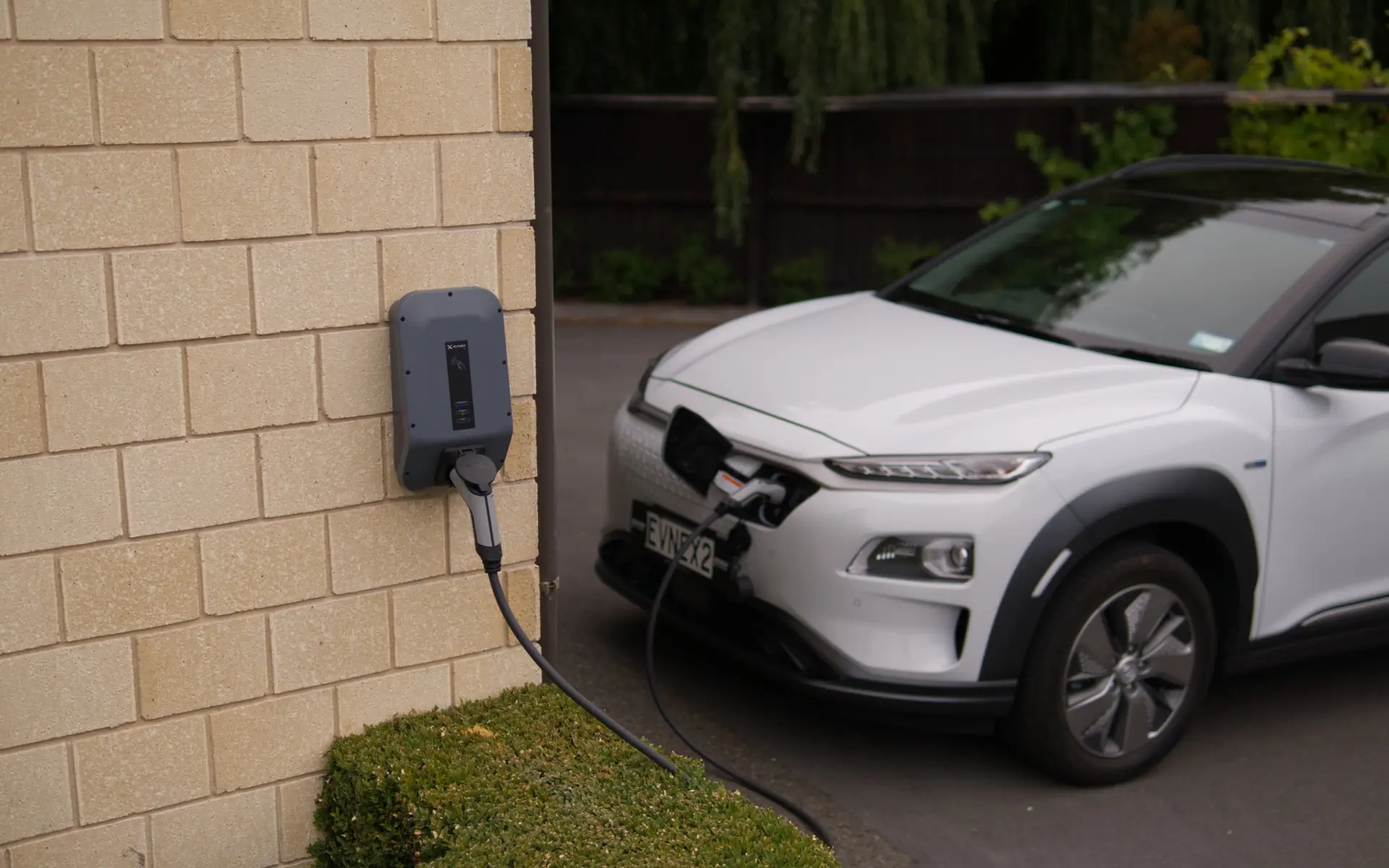
A charging cable has to comfortably reach from the socket to your car's inlet with the car parked where it normally sits. Too short and it will not reach, or it pulls taut across a walkway. Too long and you are paying more for a heavier cable that takes longer to coil and store. The goal is enough reach for how you actually park, with a bit to spare, and no more.
How to measure
You do not need to be exact, but a quick check beats guessing:
- Find your inlet. The charging flap might be at the front, the rear, or on either side of the car. That decides which end of the car the cable has to reach.
- Measure from the socket to the inlet along the route the cable will actually run, not in a straight line through the car.
- Add slack. Allow 1m to 2m so the cable is not stretched tight, and so you can still park if you pull in the other way round.
- Think about both parking directions. If you sometimes reverse onto the drive and sometimes nose in, size for the longer of the two.
Quick pick by situation
| Your situation | Suggested length |
|---|---|
| Home driveway, wallbox near where you park | 5m |
| Charge point at the far end of the drive, or you park either way round | 7.5m |
| On-street parking, shared bays, or a wallbox across the drive | 10m |
| Long driveway, parking across the road, or a detached garage | 15m |
| Larger or rural property, or a communal car park | 20m to 25m |
| Very long runs: barn conversions, smallholdings, farm tracks | 30m and up |
We stock cables all the way up to 50m for the rare run where nothing shorter will do, though most drivers never need anything beyond 10m.
Public charging: does length change?
Most public Type 2 charge points are untethered, which means you bring your own cable. A 5m usually reaches, but a 7.5m or 10m gives you more flexibility when bays are busy, when the post is set back from the car, or when you can only park nose-in on one visit and nose-out on the next. If you rely on public posts a lot, a slightly longer cable is a sensible hedge.
Does a longer cable charge more slowly?
No. A quality cable rated for its length delivers the same charging speed as a shorter one of the same rating. The real trade-offs of a longer cable are weight, price, and the time it takes to coil and store it. So pick the shortest length that comfortably reaches, rather than buying extra reach you will not use.
Still not sure?
Length is only half the story. You also need the right connector (Type 1 or Type 2) and the right power for your car. Rather than guess, tell us your car and we will match the correct cable for your vehicle's inlet and onboard charging, then you just choose the length. Enter your make and model, or your registration, on any vehicle page and we will show you the cable that fits.
Quick tool: find the right lead length for your setup with our free EV charging cable length calculator.

Written by
Gavin RogersCo-founder · drives a BMW iX2
Gavin runs a BMW iX2 and spends a lot of his time on the gap between a car's headline charging figure and what you actually get at home. A car quoting 11kW three-phase still charges at 7.4kW on a normal single-phase UK house, and that is exactly the kind of thing the site exists to make clear.
More from GavinKeep reading
More
charging guides.
Straight answers on connectors, charging speeds and what actually fits your car.
View all guides
Buying Guides
Public vs Home EV Charging: Cost and Convenience
Home charging is cheaper and more convenient for daily driving, while public charging is best kept for longer trips. Home off-peak: around 7 to 10p/kWh vs public rapid around 45 to 80p/kWh Home adds roughly 25 to 30 miles per hour; rapid DC is minutes not hours Rapid chargers are tethered; keep your own Type 2 lead for AC points

Buying Guides
Best TPMS Sensors for Electric Cars: Monitor Pressure When Parked
Tyre pressure is one of the biggest easy wins for EV range. Under-inflated tyres increase rolling resistance and reduce range by 1–3% per missing PSI. External TPMS sensors show real-time pressure on a dashboard display, including when the car is cold and parked — better than the built-in TPMS warning, which only alerts you when pressure is already critically low. Built-in TPMS warns at 25% below recommended pressure — too late for optimal range External sensors monitor continuously and alert at any deviation from your target Fits any valve stem in minutes, no coding required

How-to
Do Electric Cars Come with a Spare Tyre? (And What to Carry Instead)
Most electric cars are sold without a spare tyre. The space under the boot floor (where the spare would sit on a petrol car) is often used for the traction battery or additional storage, and the weight of a spare is avoided to improve range. Carry a tyre repair kit and inflator instead — they handle 80% of road punctures. Check your car: look in the boot floor well and the handbook — some EVs do include a space-saver spare A foam sealant kit (Holts Tyreweld) handles slow punctures and most nail/screw punctures A full repair kit (sealant + inflator) is the right kit for UK driving; some also work on the motorway

How-to
Charging Your EV in France: Everything You Need to Know
Charging in France works well on the motorway (IONITY and TotalEnergies are widespread) but requires planning for overnight stops. A portable EVSE with a Schuko plug charges from any French domestic socket. For campsites, you need a Type 2 to CEE 16A adapter. Bring the standard European driving kit — it is a legal requirement. Motorway rapid charging (IONITY, TotalEnergies, Allego): same Type 2 cable as the UK Overnight at a gite or Airbnb: portable EVSE with Schuko plug, charges at 1.8–3.5kW Campsite hookup: Type 2 to CEE 16A adapter, charges at 3.6kW from a blue caravan socket