

On this page

The best all-round EV charging cable lock for most drivers is the EVify Type 2 Connector Lock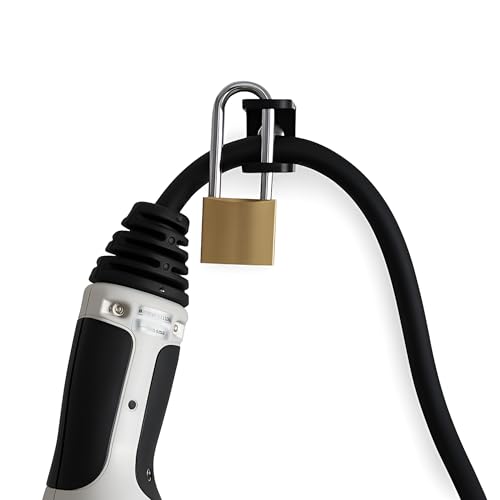 EVify Type 2 Connector Lock£19.33Buy on Amazon, a cheap, effective deterrent that stops the plug being pulled out mid-charge. EV cables contain resellable copper, so theft is real but mostly opportunistic, which means a visible lock does most of the work. The right choice depends on whether you want to secure the connector, the whole cable, or the holster it sits in. Below are five picks that cover every setup, from a simple plug lock to a full connection protector. For more on the problem itself, read our guide on how to stop EV charging cable theft.
At a glance: EV charging cable locks compared
| Product | Best for | Type | Price |
|---|---|---|---|
| EVify Type 2 Connector Lock | Best value | Plug lock | £19.33 |
| EGNIO Lockable Charger Holster | Lockable holster | Wall holder | £23.99 |
| Litorange Combination Cable Holder | Combination lock | Keyless holder | £29.99 |
| SOMA Anti-Theft Cable Protector | Full protector | Connection guard | £33.82 |
What does an EV cable lock actually protect?
Most cable locks protect one of two things: the connector, so it cannot be unplugged and walked off with, or the cable and holster, so the whole lead cannot be lifted. Type 2 connectors already lock into the car while charging, but the charger end at a wall box or post is the weak point a thief targets. A dedicated lock removes that easy grab. None of these devices make a determined thief impossible to beat, but they turn a ten-second opportunist theft into a slow, obvious job, and that is usually enough.
The best EV charging cable locks for 2026
EVify Type 2 Connector Lock: best value
This is the simplest and cheapest way to deter theft, locking the plug so it cannot be quickly removed. It fits a standard Type 2 connector and does one job well, which is exactly what most drivers need. If you only buy one thing on this list, this is it.
EVify Type 2 Connector Lock
- Locks the plug against quick removal
- Fits standard Type 2
- Cheap effective deterrent
Price on Amazon
£19.33
EGNIO Lockable Charger Holster: best lockable holster
If you charge at home and want a tidy setup, this padlock-lockable wall holder secures the connector when it is parked between sessions. It keeps the plug off the floor and out of easy reach, which suits a garage or driveway wall. A neat, practical option for a permanent home install.

EGNIO Lockable Charger Holster
- Padlock-lockable wall holder
- Secures the connector
- Tidy home setup
Price on Amazon
£23.99
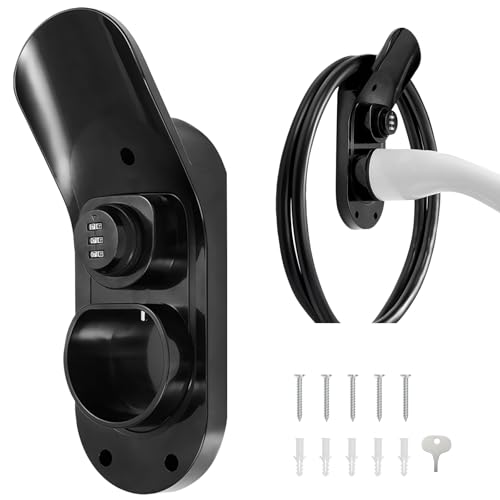
Litorange Combination Cable Holder: best combination lock
This keyless holder uses a combination lock, so there is no key to lose or fumble with in the dark. It holds and secures the cable in one unit, which is handy if several people in the house use the car. Set a code and forget it.
Litorange Combination Cable Holder
- Keyless combination lock
- Holds and secures the cable
- No key to lose
Price on Amazon
£29.99
SOMA Anti-Theft Cable Protector: best full protector
For the strongest deterrent, this guards the full connection rather than just the plug. The tough build makes it a strong, near-permanent fixture that signals to any opportunist that this cable is not worth the effort. Best for anyone leaving a cable connected for long spells in a public-facing spot.

SOMA Anti-Theft Cable Protector
- Guards the full connection
- Strong permanent deterrent
- Tough build
Price on Amazon
£33.82
What to look for in an EV cable lock
Buy for your parking situation, not the highest price. A few things matter more than the rest.
- Fit: confirm it works with a standard Type 2 connector, which almost every UK EV uses.
- Weather resistance: for outdoor walls, pick a build meant to sit in the rain, though check the listing rather than assuming a rating.
- Key or combination: a combination lock removes the risk of a lost key, while a keyed lock can feel more solid.
- Visibility: a lock a thief can see from the pavement is a better deterrent than one hidden away.
The cheapest deterrent that suits your setup is usually the smartest buy.
What we would skip
Skip anything that promises to make your cable theft-proof, because no consumer lock does that against a determined thief with cutters. The realistic goal is deterrence, so pay for a solid, visible device and no more. There is also no need to double up with three overlapping products on a home driveway. One good lock, plus the simple habit of taking the cable indoors when you are away for a while, covers most people. Save your money for a cable holder or storage bag instead if tidiness is your real issue.
Frequently asked questions
Do EV charging cable locks actually stop theft?
They stop most theft because most cable theft is opportunistic and quick. A visible lock turns a ten-second grab into a slow, obvious job, which is enough to send an opportunist elsewhere. No consumer lock beats a determined thief with tools, so pair a lock with taking the cable indoors when you are away for long spells.
Will a cable lock fit my car's connector?
Almost certainly, if your car uses a Type 2 connector, which every EV and plug-in hybrid sold in the UK since 2018 does. The locks here fit a standard Type 2 plug. If you drive an older Type 1 car, check the listing carefully, since some locks are shaped specifically for the Type 2 body.
Should I get a keyed or combination cable lock?
Both work, so it comes down to preference. A combination lock like the Litorange holder means there is no key to lose, which suits households where several people use the car. A keyed lock can feel more solid to some drivers. Either way, choose one that is easy to use in the dark and the rain.
Is my cable safe while it is charging the car?
The car end is safe, because a Type 2 connector locks into the car while charging and cannot be pulled out. The weak point is the charger end at the wall box or post. A connector lock or lockable holster protects that end, which is where a thief would otherwise unplug and take the cable.
Do I need a lock if I charge on a private driveway?
It is less urgent than on-street, but still worth it. Driveway theft happens, especially where the cable is visible from the pavement. A simple, cheap connector lock or a lockable holster gives peace of mind for little money. If your driveway is gated and out of sight, you may decide a tidy holder is enough.
Are weatherproof cable locks worth the extra cost?
For outdoor use, yes, a weather-resistant build lasts far longer than a basic indoor one. That said, do not assume a specific waterproof rating unless the product listing states it. Read the description, and if the lock will live on an exposed wall in all seasons, spend a little more on something clearly built for the outdoors.
A cable lock is one of the cheapest bits of EV kit you can buy, and for most drivers a simple connector lock does the job. If you want the full picture on keeping your lead safe, read our guide on how to stop EV charging cable theft, and pair your lock with tidy storage using our roundup of the best EV charging cable holders and wall mounts. Need the cable itself first? Start with our Type 2 charging cables.

Written by
Gavin RogersCo-founder · drives a BMW iX2
Gavin runs a BMW iX2 and spends a lot of his time on the gap between a car's headline charging figure and what you actually get at home. A car quoting 11kW three-phase still charges at 7.4kW on a normal single-phase UK house, and that is exactly the kind of thing the site exists to make clear.
More from GavinKeep reading
More
charging guides.
Straight answers on connectors, charging speeds and what actually fits your car.
View all guides
Buying Guides
Public vs Home EV Charging: Cost and Convenience
Home charging is cheaper and more convenient for daily driving, while public charging is best kept for longer trips. Home off-peak: around 7 to 10p/kWh vs public rapid around 45 to 80p/kWh Home adds roughly 25 to 30 miles per hour; rapid DC is minutes not hours Rapid chargers are tethered; keep your own Type 2 lead for AC points

Buying Guides
Best TPMS Sensors for Electric Cars: Monitor Pressure When Parked
Tyre pressure is one of the biggest easy wins for EV range. Under-inflated tyres increase rolling resistance and reduce range by 1–3% per missing PSI. External TPMS sensors show real-time pressure on a dashboard display, including when the car is cold and parked — better than the built-in TPMS warning, which only alerts you when pressure is already critically low. Built-in TPMS warns at 25% below recommended pressure — too late for optimal range External sensors monitor continuously and alert at any deviation from your target Fits any valve stem in minutes, no coding required

How-to
Do Electric Cars Come with a Spare Tyre? (And What to Carry Instead)
Most electric cars are sold without a spare tyre. The space under the boot floor (where the spare would sit on a petrol car) is often used for the traction battery or additional storage, and the weight of a spare is avoided to improve range. Carry a tyre repair kit and inflator instead — they handle 80% of road punctures. Check your car: look in the boot floor well and the handbook — some EVs do include a space-saver spare A foam sealant kit (Holts Tyreweld) handles slow punctures and most nail/screw punctures A full repair kit (sealant + inflator) is the right kit for UK driving; some also work on the motorway

How-to
Charging Your EV in France: Everything You Need to Know
Charging in France works well on the motorway (IONITY and TotalEnergies are widespread) but requires planning for overnight stops. A portable EVSE with a Schuko plug charges from any French domestic socket. For campsites, you need a Type 2 to CEE 16A adapter. Bring the standard European driving kit — it is a legal requirement. Motorway rapid charging (IONITY, TotalEnergies, Allego): same Type 2 cable as the UK Overnight at a gite or Airbnb: portable EVSE with Schuko plug, charges at 1.8–3.5kW Campsite hookup: Type 2 to CEE 16A adapter, charges at 3.6kW from a blue caravan socket